

The pet industry is apparently booming. Around 62% of UK households now own a pet, including 15.5 million dogs. Just this week, a survey of 1,800 UK dog owners, commissioned to promote a new TV dog show, found that owners spend an average of £101 a month on their dog.
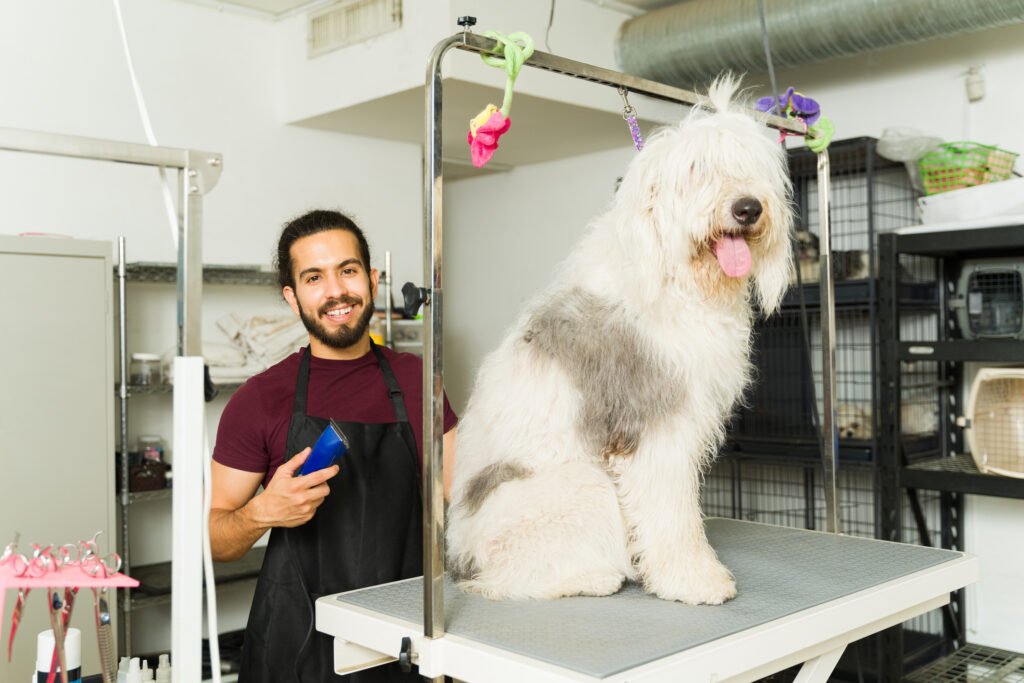
It’s no surprise that demand for pet services appears to have increased significantly over the last five years. From doggy day care and training services to cat hotels and cafes, most towns now have some sort of pet-focused business. Perhaps the most common, and one of the most appealing in terms of a potential career, is dog grooming.
For a lot of people, it’s one of the more accessible ways into hands-on animal work. With relatively affordable training courses available through organisations such as City & Guilds or EdYouCate, and trainee or apprenticeship roles regularly advertised at established businesses, it represents an achievable career path. A dog grooming career can be physically demanding and require a high level of knowledge and skill, but it doesn’t require years of university or unpaid volunteering to get a foot in the door. And once established, it offers a level of flexibility that most other animal-care careers can’t match. You can be self-employed, working from home, a mobile van, or rented space, building your own client list and choosing your own hours.
But, like all careers that seem too good to be true, there is risk. As the saying goes, you never know you’re in a bubble until it pops. For some, dog grooming will continue to be the ideal career, but it’s important to be aware of what challenges the industry may face and what the long-term job security might be before you set out.
How grooming got this big
Contrary to what you may think, pet owners were already spending big before the pandemic. Research reported by the Guardian in 2017 found that UK pet owners spent £7.16 billion on their pets in 2015, up 25% since 2010, as owners increasingly paid for extras like grooming, pet-sitting and premium food. What the pandemic did do was accelerate that growth. An estimated 3.2 million UK households got a pet during Covid, and most of those new owners were under 35. The most recent industry estimate puts the UK’s pet grooming market (which includes cats as well as dogs) at roughly £420 million. It’s unsurprising, then, that new or growing grooming salons are frequently on the lookout for more staff to meet the increasing demand. Larger players are getting in on the act too, with Pets at Home now operating 350 Groom Room salons across its stores.
Entry routes and the regulation question
There’s currently no legal qualification requirement to call yourself a dog groomer in the UK, though calls for change are growing. Pet groomers are often the first line of welfare support for many animals. They may pick up on skin conditions, lumps, ear infections, a dental problem, or early signs of neglect. Similarly, they may be required to work with nervous or undersocialised animals, and can become an important part of how an animal’s behaviour is shaped and managed long term.
To help formalise these skills, the Canine & Feline Sector Group, the Pet Industry Federation and the British Isles Grooming Association jointly launched voluntary Guidelines for Dog and Cat Groomers, in June 2025. It covers training, insurance, emergency procedures, hygiene and how to handle different temperaments, everything from a nervous rescue dog to a show-trained poodle. It’s not legally binding, but it gives owners something to actually check for, and it’s a sign of where the profession is trying to head on its own.
That lack of formal, legal regulation is also on the way to changing. Following a 2025 consultation on the licensing of animal welfare establishments and activities in Wales, 82% of respondents backed regulation. Pet grooming (dog and cat grooming together, though dog groomers make up most of the trade) was flagged as a priority area, with the Welsh Government estimating over 500 pet groomers operating in Wales. Scotland has a similar proposal on the table. Neither has a confirmed date for actually becoming law yet, but if you’re weighing up training routes now, it’s worth choosing a recognised qualification rather than assuming none will ever be required.
The cost-of-living crisis
Last week, the Royal Veterinary College published a study of 770 UK dog owners looking at how the cost-of-living crisis is changing the way people care for their dogs. Among the owners who had made cuts, one thing came up again and again: using a professional groomer less often. It was one of the single most common changes people made, right up there with reducing pet insurance and cutting back on paid dog walking.
That fits a wider pattern. PDSA’s 2025 Animal Wellbeing report found 51% of pet owners are worried about being able to afford their pet’s veterinary care at all. At the sharper end, the RSPCA received 24,270 reports of abandoned animals between January and October 2025, almost 23% up on the same period the year before and the highest in at least six years.
These may be the first signs of the pet grooming bubble bursting, or at the very least, a test of whether grooming’s growth was built on solid ground.
Growth industry, or a market finding its ceiling?
It’s too soon to say, but it’s something that anyone considering a long term career in pet grooming should be aware of. Some forecasts suggest the industry will continue to grow by close to 6% a year, but that figure predates this year’s cost-of-living data. Only 12.4% of the owners in the RVC study had made any negative changes to their dog’s care at all, so this isn’t yet a sector collapsing. But grooming is clearly one of the first things people cut back on when money gets tight, which shows it’s still viewed as a discretionary service rather than an essential one, and that has real implications if you’re building a career around it.
Whatever happens, the market probably favours groomers with lower overheads. Mobile grooming and home-based setups, which make up a large share of the UK market already, cost less to run than a fixed salon, which matters if client visits become less frequent or clients start shopping on price. It also means the case for professionalism gets stronger, not weaker: a groomer who’s properly trained, builds real client relationships, and can point to the health-monitoring value they add is in a better position than one competing purely on being the cheapest option in town.
Start-up costs for a home or mobile grooming business are not prohibitive, and a well-established groomer with a full client list can do well. The early years building a reputation are the hard part, and that’s true irrespective of what is happening in the wider economy.
Where to start
The British Dog Groomers’ Association or EdYoucate’s dog grooming diploma info page are both solid starting points if you’re weighing this up as a career. If you want to understand where regulation might be heading, Scotland’s consultation on licensing dog groomers sets out what a licensing scheme would actually involve.
Growth industry, or bubble waiting to burst? Right now, it’s simply too early to call. What matters is going in with your eyes open, aware of both the opportunity and the risk, whichever way the market moves next.