

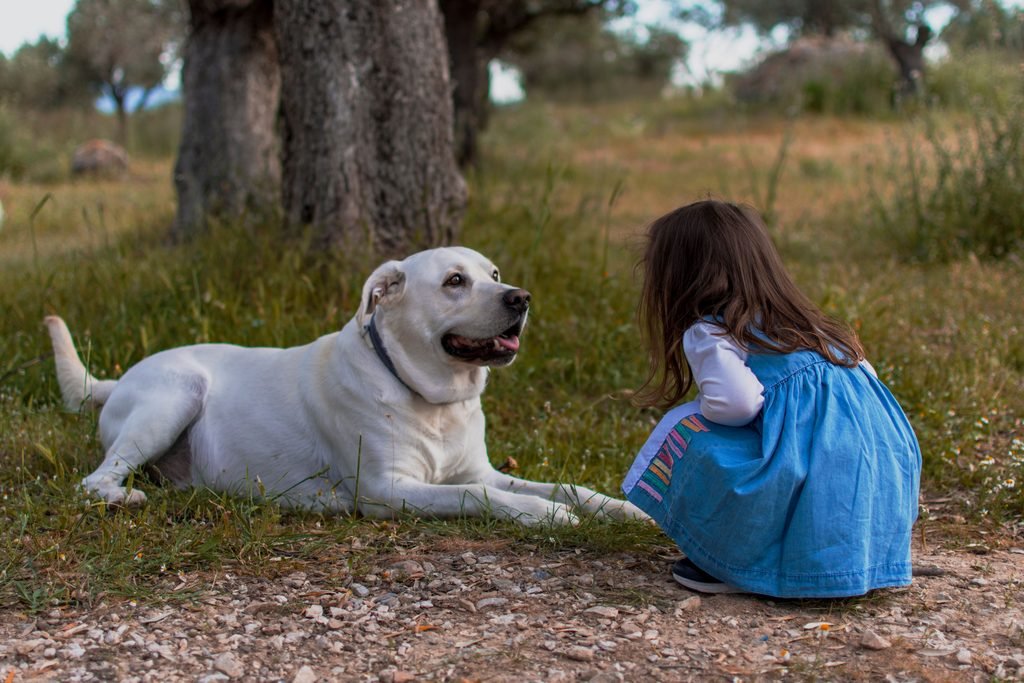
For many parents with young children, welcoming a dog into the family home is a milestone. It can feel like the final piece of the jigsaw. A loyal friend who will feature in happy childhood memories, popping up in photos and anecdotes long after the children have grown up.
For some, the role of the family dog has grown in importance. People who a few years ago might not have considered owning a dog now see them as an antidote to the stresses and strains of modern life. In a 2025 UK study of families who bought a puppy, most of them during the pandemic, just over half of caregivers (53.7%) said they got their dog to improve their family’s mental health.
It’s no surprise then that a common criticism levelled at animal rehoming organisations comes from parents seeking to adopt a dog in need. Despite rescues regularly highlighting how many dogs are waiting for homes, they’re told that none meet their specific requirements, or find themselves on a waiting list that never seems to go anywhere.
This post looks at why rehoming dogs to families with children is so difficult, and the reasons behind the policies rescue staff work to when matching dogs with suitable homes. From dog bite data, dog control legislation and insurance requirements, to the role of the media and the reputational risk charities face if they get it wrong, the reality is complicated.
This isn’t a verdict on any charity’s policy. It’s an insight into the pressures rescues work under, written for people working in animal rescue, anyone hoping to build a career in it, and families frustrated by the adoption process.
The reality of rehoming dogs to families with children
Apply to adopt a dog from many UK rescue centres, and you’ll probably have to complete a form that includes a section on “your ideal dog”. It’ll look something like this…
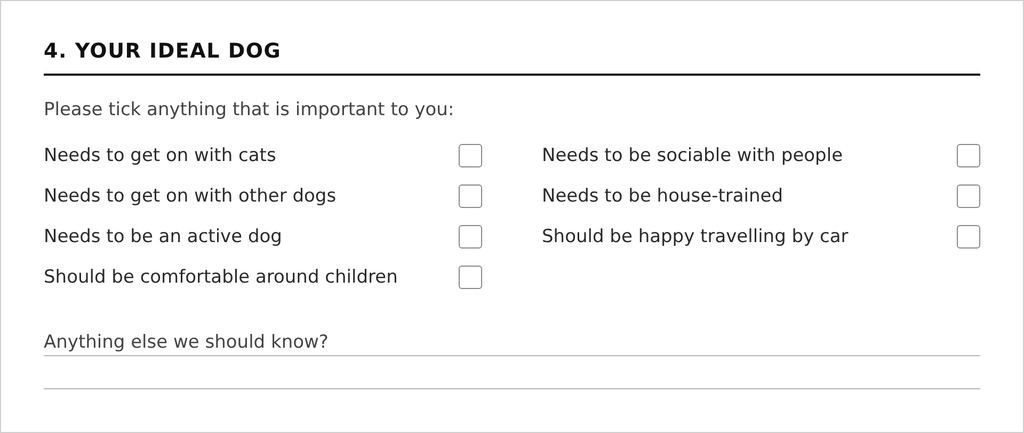
With this information established, a rescue can narrow its list of available dogs. It then identifies potential matches based on any previous history, behavioural assessments and observations from each dog’s time with the rescue.
Battersea, for example, says it uses information from previous owners and a dog’s behaviour in the centre to “determine what age of children we feel they would be suitable for”. It says some dogs are not suited to homes with children, and that it can be cautious about rehoming to families with young children, which may make finding a dog harder.
But that is only part of it. Numerous factors come into play, and each one can narrow the options for a home with young children.
Stray dogs and unknown histories
Receiving stray dogs is part and parcel of rescue work. A 2026 Battersea report found that only 13% of strays collected by a panel of 50 local authorities in March 2026 had a correctly registered microchip. Most can’t easily be reunited with an owner, so many pass to a rescue with no known history. In Dogs Trust’s 2024 to 2025 survey, councils passed 41% of dogs with a recorded outcome on to a welfare organisation. Without any record of living with a family, a rescue has little to go on, and it can’t realistically assess how a dog will behave around children in a kennel or assessment setting.
How rescues assess risk
With a dog that has no history, rescues partly base decisions about the kind of home it could go to on risk: what could go wrong, how likely it is, and how serious the outcome would be. The Health and Safety Executive describes risk assessment in much the same terms, as deciding “how likely it is that someone could be harmed and how serious it could be”. A young, well-socialised small terrier, for example, presents less risk than an older, nervous large dog, and if there were an incident of aggression, the outcome would probably be far less serious.
None of this is an exact science. A 2026 commentary in the journal Animals notes that bite severity is partly related to the size and capacity of the dog, and that some common shelter behaviour tests have very limited predictive value. Rescues most often clear dogs with a known history of living with a family without issues as suitable for homes with children, and usually rehome strays more cautiously.
The mix of dogs matters too. Dogs Trust’s survey also found that councils most often named Staffordshire Bull Terriers and crosses, lurchers and bull-type dogs among the strays they handled, and no toy breeds appeared in the report’s top ten. Because the outcome of an incident is more serious with a larger, stronger dog, it follows that a smaller share of strays are likely to be cleared for homes with children.
That is why the box on the adoption form that says “Should be comfortable around children” is often the hardest one for a rescue to confirm.
Behavioural risks and busy homes
A home with young children can be gloriously chaotic. From play fights that get out of hand to broccoli-induced tea-time tantrums, it’s a lot for a nervous dog or one that has had a tough start in life.
Dogs Trust’s advice on settling a rescue dog is to create a routine and stick to it. It also suggests setting up a den in a quiet space away from busy areas, and keeping the home calm and avoiding visitors in the first days. That is a big ask of a busy household with young children.
Even for a dog with a long and sound history, a rescue has to observe and record what it sees during the dog’s time in kennels. A grumble or a snap on record doesn’t always rule a dog out, but it has to be weighed against the risk of placing that dog with children, and it can make the dog harder to insure for rehoming.
A dog can be bombproof around children and still carry risk because of another behavioural issue, such as reactivity to other dogs. These dogs need careful management plans, and the presence of children can make those plans harder to follow.
It isn’t only rescues that face this. Guide Dogs receives hundreds of applications from families each year, many assuming that a young dog that didn’t make the grade as a guide dog will be a more family-friendly option than a rescue dog. That isn’t always the case. Guide Dogs says its dogs may not have qualified as guide dogs because of health or behavioural needs, which “can range from mild to severe”. The behaviours it lists include being reactive to other dogs, separation anxiety and being too strong on the lead.
Snowy’s story
In one rescue I worked in, I fostered an amazing Staffie called Snowy for the best part of a year while we searched for her forever home. She was brilliant with children, as close to bombproof as you could imagine. Her difficulty, as with so many dogs in rescue, was how she reacted to other dogs.
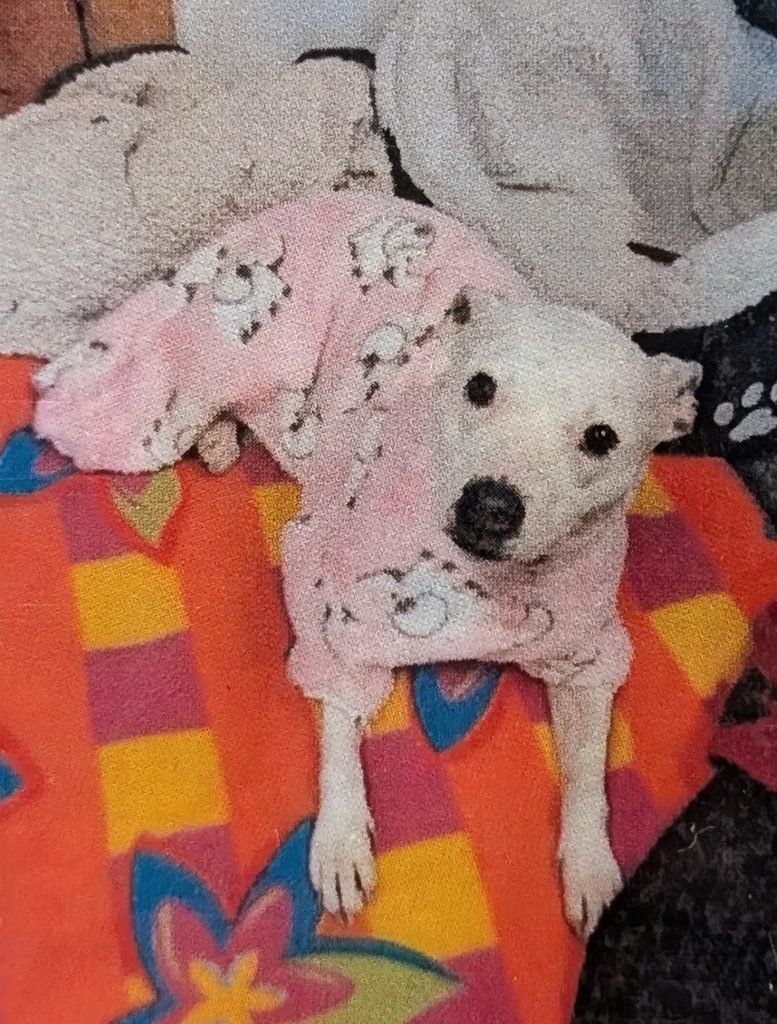
Eventually we found what looked like the perfect match: a family with one child, in a rural location with no other dogs around. We spent several weeks on introductions, walks and a detailed behaviour plan, and every time we repeated the same message: Snowy is reactive around other dogs.
She came back within three days, after the owner decided to let their seven-year-old child hold her lead on a walk. They bumped into another dog, and Snowy lunged, pulling the child over. No one was physically hurt, but it could have been much more serious if the other dog had retaliated.
It set Snowy back and left the child nervous around her and other dogs. A few months later, Snowy went to a home with no children.
What the data shows
In 2025/26, NHS hospitals in England recorded 10,796 admissions as a result of someone being bitten or struck by a dog.
Around 15% of the recorded episodes of care were for children under 18, and about 10% involved children aged 1 to 9. There is no statutory duty to report dog bites, so the real number of bites across the UK will be higher. Similarly, hospital records don’t capture breed, so the figures show scale but not which dogs carry the most risk.
Research on this subject varies, but one study of children under 16 treated at Blackpool Victoria Hospital found that about 77% of bites happened in a home setting. About 80% came from a dog the child knew, most commonly the family dog (43.6%). An adult was present in 89% of incidents, though the authors argue that an adult being in the room is not the same as effective supervision. It is a single-centre study, so it doesn’t give a national picture, but it shows a pattern that some other studies have also found. A 2018 paper in Frontiers in Veterinary Science, citing earlier work, puts the share of bite accidents at home at about 75%, usually involving a familiar dog.
What the law says
From 1 November 2026, owners of exempted banned-type dogs, including XL Bullies, must not leave a child under 12 in close contact with their dog without adult supervision. It applies in England, Wales, Scotland and Northern Ireland.
Aside from that, there is no UK law requiring adult supervision of children around dogs in general. Government guidance advises supervising all dogs around children, but that is advice, not a legal requirement. That leaves rescues to set their own rules. The general law still applies, though. Under section 3 of the Dangerous Dogs Act 1991, as amended in 2014, an owner or person in charge commits an offence if a dog is dangerously out of control in any place in England or Wales. That includes private property such as a home or garden. The maximum penalty is up to 5 years if a person is injured and up to 14 years if a person dies.
How insurance shapes rehoming dogs with children
Insurance is often the guiding principle when a rescue writes its policies, and it works on two levels.
There is the cover provided to the adopter for the dog, which depends on the rescue’s own behavioural assessment of that dog. And there is the rescue’s own liability insurance, which it would struggle to operate without and which matters if a rehomed dog goes on to cause harm.
Insurers don’t like risk, and that makes rehoming dogs to families with children difficult, because a rescue cannot realistically assess how a dog will behave around them. If an insurer won’t cover a dog, or will only cover it with exclusions, it becomes much harder to rehome.
There is a financial side too. Many rescues receive commission from insurers such as Petplan, which gives adopters four weeks of free cover and pays the rescue a share of the premium if the owner then takes out a full policy. For smaller rescues in particular, that can be an important source of income, so it pays to work closely with the insurer.
Insurance can shape the rules in other areas too. Defra’s reason for removing the insurance requirement for banned breed owners from 1 July 2026 was the withdrawal of the only available provider and the lack of any suitable alternative on the market.
Reputation matters too
An adoption that goes wrong doesn’t only affect the family and the dog. A serious incident involving a rehomed dog can draw media attention, and rescues depend on the trust of donors, supporters and the wider public. Rehoming teams know that a single story can shape how people see a charity.
I’ve also seen a rescue’s own role come under close scrutiny, with the dog’s behavioural assessments and the decision to rehome it reviewed. That sits alongside legal liability and insurance, and it reinforces caution when the risk involves a child.
Snowy’s story is a good example. We had covered all the bases, and it still went wrong. If Snowy had seriously injured a child, people would have blamed the rescue.
Careful matching
No single factor makes rehoming dogs to families with children hard. It’s the combination: dogs with little known history, behaviour that is hard to predict around children, the possibility of serious harm, insurers wary of risk, and charities that depend on public trust.
For families, that means a rescue’s caution is rarely personal. It’s about protecting both the child and the dog, and staying open-minded about which dog comes home can help. For those working in rescue, it comes down to careful matching.
Useful resources
- Teaching Children and Parents to Understand Dog Signaling (2018)
- Dogs Trust: how to help a rescue dog settle in
- Hogue et al.: The Use of Structured Professional Judgement to assess bite risk from dogs (Animals, 2026)
Dogs Trust also runs a family workshop for children aged seven to eleven, which is worth knowing about if you work with families.
Skills worth building
Rehoming roles involve reading dog body language, carrying out and interpreting behavioural assessments, visiting homes, and having honest conversations with adopters, including saying no or not this dog.
Our skills roundup lists free and low-cost training, including animal first aid and verbal de-escalation, both of which are useful for rehoming work.
The aim for rescues, and for anyone joining them, is a home that works for the dog and the household over the long term.
If you’re ready to look for a role, you can browse current rehoming vacancies on Jobs With Animals.